Costa Rica travel guide
Puerto Viejo, Costa Rica: A Practical Caribbean Coast Guide
Plan Puerto Viejo de Talamanca with practical advice on beaches, Cahuita, Gandoca-Manzanillo, wildlife, surf, transport and how many nights to stay.
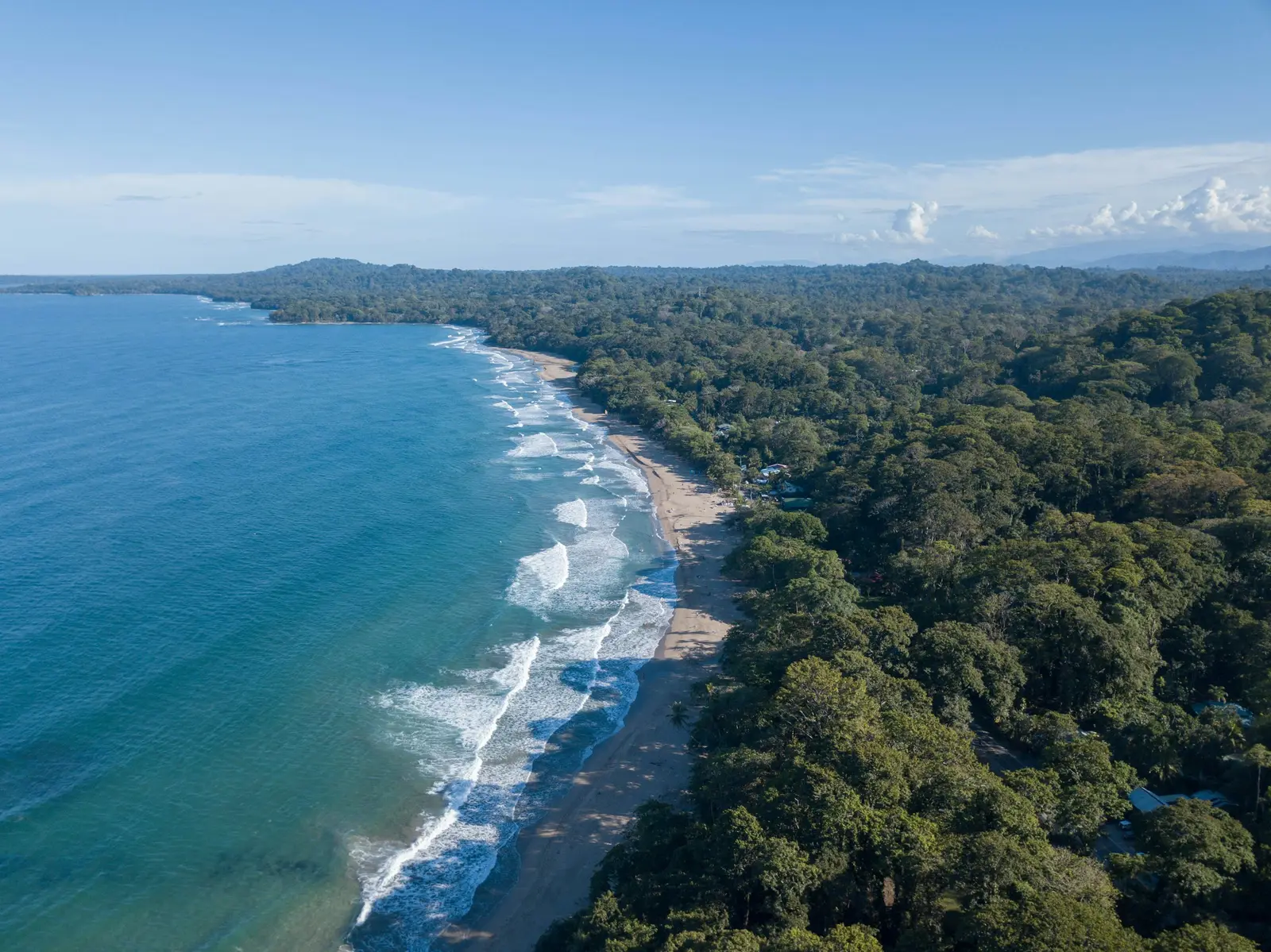
Puerto Viejo de Talamanca is the Caribbean base to choose when you want beaches, rainforest, Afro-Caribbean culture and a slower coastal rhythm in the same part of Costa Rica. The town sits on the southern Caribbean coast, with Cahuita to the north and Cocles, Punta Uva and Manzanillo stretching south along the coast.
It is not a simple substitute for Manuel Antonio or Guanacaste. Puerto Viejo changes the geography of the trip, and that is exactly why it deserves several nights rather than a rushed detour.
For a first visit, think of Puerto Viejo as a four-night regional base, not just one beach town.
Why choose Puerto Viejo?
Choose Puerto Viejo if you want:
- a Caribbean rather than Pacific coast experience;
- beaches with different personalities within a short corridor;
- easy access to Cahuita National Park;
- Gandoca-Manzanillo wildlife and coastal scenery;
- surfing and beach time;
- wildlife, chocolate and cultural experiences;
- a town with restaurants and nightlife rather than an isolated resort.
Costa Rica's official tourism material describes Puerto Viejo as one of the southern Caribbean's main visitor centers and highlights the combination of beaches, nature, food, music and Afro-Caribbean culture.
How many nights should you stay?
Three nights is the minimum that makes the transfer worthwhile.
Four nights is better for most travelers because it gives you time for:
Day 1: arrive, settle in and explore Puerto Viejo.
Day 2: Cahuita National Park.
Day 3: Cocles, Punta Uva and the southern coast.
Day 4: wildlife, chocolate, surfing or Gandoca-Manzanillo.
Five nights works well if you want a slower beach trip rather than a route built around moving every two or three days.
Puerto Viejo or Cahuita?
Puerto Viejo is the stronger base if you want the widest restaurant choice, nightlife, surf-town energy and easy access to several beaches south of town.
Cahuita is smaller and quieter, with the national park immediately beside the village.
You do not need to change hotels to experience both. Cahuita is an easy day trip from Puerto Viejo, and many travelers will prefer keeping one base.
Use our Cahuita National Park guide before deciding how much of a day to reserve for the park.
Beaches south of town
The coast south of Puerto Viejo is not one continuous identical beach.
Cocles is one of the area's best-known surf beaches and has services close to the road.
Playa Chiquita feels smaller and more tucked into the vegetation.
Punta Uva is a good choice when you want scenic water and a more relaxed beach day.
Manzanillo sits farther south beside the wildlife refuge and works well as the endpoint of a coastal exploration day.
Sea conditions change. Do not assume a calm-looking Caribbean beach is automatically safe for swimming; pay attention to current conditions and local warnings. Use the Puerto Viejo beaches guide to compare Cocles, Chiquita, Punta Uva, Manzanillo and Playa Negra.
Cahuita National Park
Cahuita is one of the strongest reasons to add the Caribbean coast.
The park combines coastal forest, wildlife, beaches and coral reef. Trails run near the shoreline, so the experience feels different from an inland rainforest hike.
Sloths, monkeys, raccoons, coatis, iguanas and many bird species are associated with the park, although wildlife sightings are never guaranteed.
Snorkeling is a separate reason to visit when sea conditions allow and current park rules permit the activity in designated areas.
Gandoca-Manzanillo
South of Puerto Viejo, Gandoca-Manzanillo Wildlife Refuge protects a mix of beach, wetland, reef and forest habitats.
For most travelers based in Puerto Viejo, the Manzanillo side is the practical entry point for a day of coastal walking and nature.
Do not confuse a visit to Manzanillo village with automatically exploring the whole protected area. The refuge is much larger and includes different habitats and access points.
Surfing
Puerto Viejo is a major surf destination, but not every break is beginner-friendly.
Beginners should use a lesson or choose conditions matched to their ability. More powerful breaks can be unsuitable for first-timers.
If surf is only one part of the trip, staying around Cocles can make it easy to combine lessons with beach time and access to town.
Chocolate and cultural experiences
The southern Caribbean has strong cacao traditions, including Bribri communities and local chocolate projects.
A good chocolate-focused experience should explain cacao cultivation and processing rather than functioning only as a tasting stop.
This can be a useful inland counterpoint to beach-heavy days, especially if you want a trip that connects food, agriculture and local culture.
Do you need a car?
Not necessarily.
Puerto Viejo is one of the easier Costa Rica regions to explore with a mix of walking, bicycles, taxis, local transport and organized tours.
A rental car becomes useful if you are connecting the Caribbean with several inland regions or want maximum flexibility.
The main coastal road connects Puerto Viejo with Cahuita and the beaches toward Manzanillo, so the region is more linear than Guanacaste.
See San José to Puerto Viejo for the long-distance transport decision. If Arenal is the next stop, use Puerto Viejo to La Fortuna instead of routing back through San José.
When should you go?
Do not apply Pacific dry-season assumptions directly to the Caribbean.
Costa Rica's Caribbean coast has a different rainfall pattern from Guanacaste and the central Pacific. September and October can sometimes be attractive on the southern Caribbean even when Pacific destinations are deep into green season.
Use Costa Rica weather and best time to visit Costa Rica together instead of choosing purely by the national season label.
Does Puerto Viejo fit a 10-day trip?
It can, but not cleanly as an extra stop on our standard 10-day Costa Rica itinerary.
Adding Puerto Viejo to San José, La Fortuna, Monteverde and Manuel Antonio usually creates too much cross-country movement.
For ten days, build a Caribbean variant rather than adding a fifth region. A practical version could combine San José/arrival, La Fortuna and Puerto Viejo, with one additional stop only if transfers remain reasonable.
For a 14-day Costa Rica itinerary, the Caribbean becomes easier to justify.
What should you book first?
Book the transfer and accommodation first.
Then choose one or two activities that benefit from advance planning. A Jaguar Rescue Center visit can add conservation context to a wildlife-heavy stay.
Good options include:
- Cahuita snorkeling plus guided wildlife walking;
- a surf lesson;
- a cacao/chocolate experience;
- a guided nature outing;
- a southern-coast excursion.
Use things to do in Puerto Viejo to compare the main options before filling every day.
Plan the Puerto Viejo cluster
Use these guides as the next layer:
- best beaches near Puerto Viejo for Cocles, Chiquita, Punta Uva and Manzanillo;
- Cahuita National Park for coastal wildlife and reef planning;
- Gandoca-Manzanillo Wildlife Refuge for the protected southern coast;
- Jaguar Rescue Center for wildlife rehabilitation and conservation context;
- San José to Puerto Viejo for the arrival route;
- Puerto Viejo to La Fortuna when Arenal is the next base.
Keep planning
Build the rest of your Costa Rica trip
Use the core planning guides to connect where you stay, what you do and the day trips that are worth the travel time.