Costa Rica travel guide
San José, Costa Rica: A Practical Stopover Guide
Plan a short stay in San José, Costa Rica, with advice on downtown sights, airport logistics, how many nights to stay and whether the capital belongs in your itinerary.
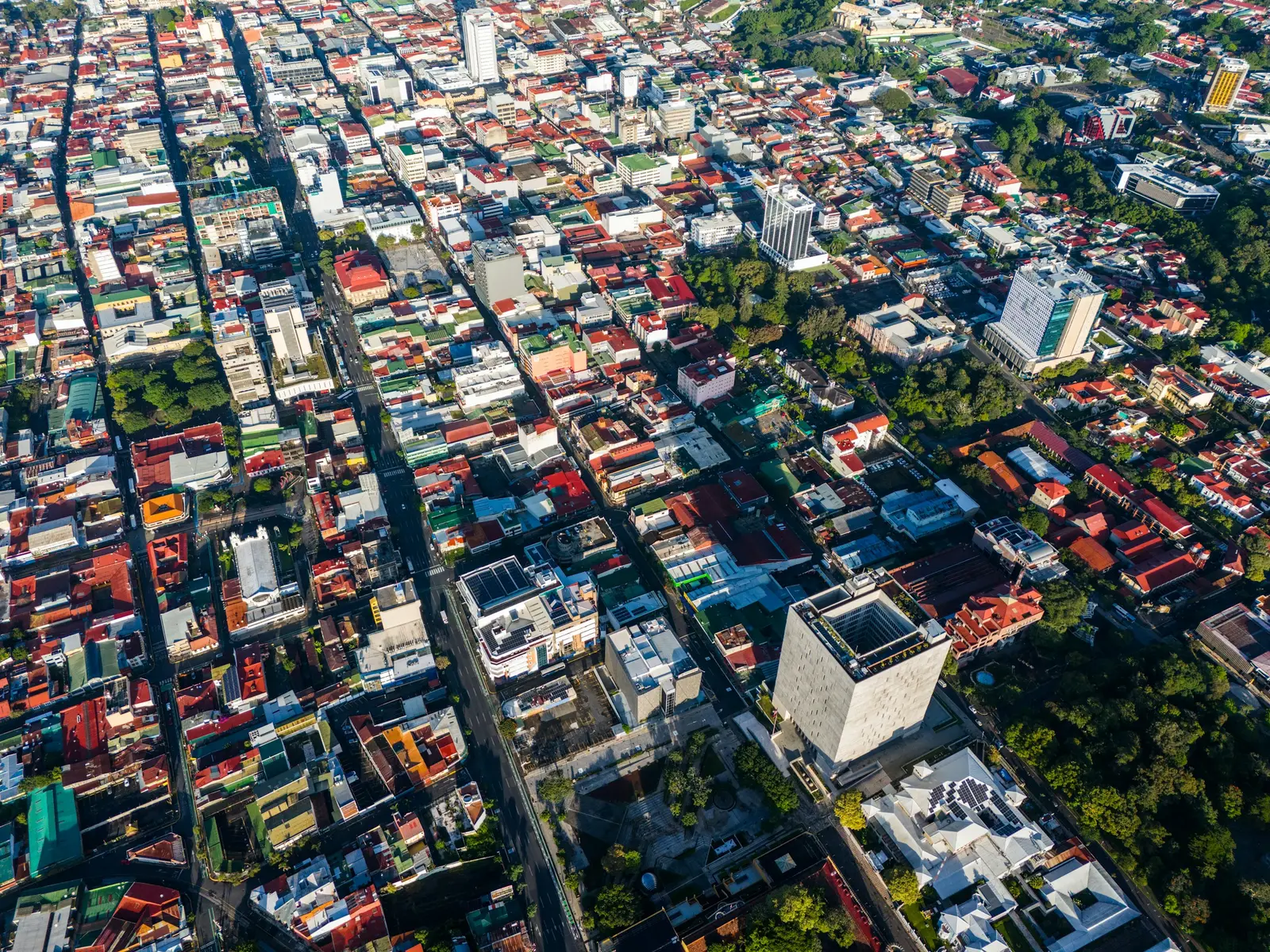
San José is most useful when you treat it as a real city rather than simply the name attached to Costa Rica's main airport. The capital has museums, markets, historic buildings and restaurants, but many nature-focused visitors only need a short stay before moving on to La Fortuna or another region.
For our 10-day Costa Rica itinerary, one night is usually enough unless you specifically want city time.
The first planning detail is geographic: Juan Santamaría International Airport is near Alajuela, not in downtown San José. An airport-area hotel and a central-city hotel therefore serve different purposes.
How many nights should you spend in San José?
For most first-time travelers: zero to one full night.
Stay near the airport if you arrive late, depart early or simply want an easy buffer before a longer transfer.
Stay downtown or in a central neighborhood if you arrive early enough to explore museums, the National Theatre, Central Market and the urban center.
Stay two nights if San José itself interests you or if you want a deliberate Central Valley day trip.
Do not add city nights automatically just because international flights use the area.
What is worth seeing downtown?
Costa Rica's official tourism information highlights San José's museums, parks, theaters and historic buildings.
For a compact first visit, focus on a walkable group of central sights rather than trying to cross the whole metro area.
National Theatre
The Teatro Nacional is one of the capital's landmark historic buildings and sits near Plaza de la Cultura.
Even travelers who are mainly in Costa Rica for nature get useful cultural context from seeing the historic center rather than moving directly from airport to rainforest.
Central Market
Mercado Central gives you a dense introduction to everyday food, small shops and local commerce.
Visit during daytime and treat it as a working market rather than a staged attraction.
Museums
Several important museums sit in or near central San José, including collections focused on Costa Rican history, art, gold and jade.
Opening days and hours can change, so check the specific museum before building a fixed schedule around it.
Is San José walkable?
Parts of central San José are practical on foot during the day.
That does not mean the entire metro area is a pleasant walking destination. Attractions and hotels outside the center may require taxis or other transport, and traffic can make short distances take longer than expected.
Choose accommodation based on what you actually plan to do. If your goal is a downtown walking afternoon, stay centrally. If your goal is an early flight, stay near the airport instead.
San José vs the airport area
This distinction saves many first-time visitors unnecessary travel.
Airport area: practical for arrivals, departures, rental-car pickup and an overnight buffer.
Central San José: better for museums, markets, restaurants and historic-city sightseeing.
Driving from the airport area into downtown simply to sleep and then returning toward the airport corridor the next morning may add traffic without adding value.
If your next stop is La Fortuna, compare your arrival time with our San José airport to La Fortuna guide before deciding where to sleep.
Should you rent a car in San José?
You do not need a car to explore the center.
Urban traffic and parking can reduce the benefits of having one, especially if the vehicle would sit while you walk around downtown.
If you intend to self-drive the rest of the trip, consider whether pickup on the morning you leave the city makes more sense than paying for an extra rental day and parking.
Our Costa Rica rental-car guide covers the broader decision.
Can San José be a base for day trips?
Yes, but choose selectively.
The Central Valley gives access to volcano landscapes, coffee-growing areas and cultural attractions. Organized excursions can make sense if you have a spare day and do not want another hotel change.
What usually does not make sense is using San José as a base for repeated long day trips to places where you really should stay overnight.
La Fortuna, Monteverde and Manuel Antonio deserve their own bases on a normal first trip.
Is San José worth visiting?
Yes, if you are interested in Costa Rican urban life, history or culture.
No, in the sense that a traveler with seven days does not need to sacrifice a full nature destination simply to say they spent time in the capital.
The right question is whether San José adds something your itinerary currently lacks.
If your trip is already dominated by volcanoes, wildlife and beaches, even half a day in the center can provide useful contrast. If your arrival is late and you are exhausted, an airport-area dinner and early night may be the better travel decision.
Safety and practical habits
Use normal city precautions.
Keep phones and valuables controlled in busy areas, use reliable transportation at night, and ask your hotel about current walking routes rather than assuming every nearby street feels the same after dark.
Costa Rica's official tourism safety advice recommends avoiding isolated or poorly lit areas and checking maps or phones from secure locations.
This is practical city behavior rather than a reason to avoid San José.
A simple one-day plan
If you have one full day:
Morning: start in the central historic area, visit a museum or the National Theatre and walk the pedestrian streets.
Lunch: use the Central Market area or another central restaurant district.
Afternoon: choose one additional museum, a guided city experience or relaxed neighborhood time rather than trying to add a distant volcano.
Evening: eat near your hotel and prepare for the next day's transfer.
If you only have a few hours, reduce this to the National Theatre/Plaza de la Cultura area plus the market.
Where San José fits in a 7-, 10- or 14-day trip
On a 7-day itinerary, San José is mostly a logistics stop unless city culture is a priority.
On our 10-day route, one arrival night works well before La Fortuna.
On a 14-day itinerary, you can afford a real city day without sacrificing one of the main natural regions.
The capital is useful when it has a clear role. Decide whether that role is city experience, arrival buffer or departure buffer, then book the right part of the metro area.
If Manuel Antonio is your next major stop, compare San José to Manuel Antonio. For the trip-level logistics, keep Costa Rica entry requirements, Costa Rica safety and the Costa Rica without a car guide with your arrival planning.
Keep planning
Build the rest of your Costa Rica trip
Use the core planning guides to connect where you stay, what you do and the day trips that are worth the travel time.