Costa Rica travel guide
Best Beaches in Costa Rica: Choose the Right Coast for Your Trip
Compare Costa Rica beaches by region, including Manuel Antonio, Guanacaste, Nicoya, the Central Pacific and Caribbean coast, with practical advice on swimming, surfing and route planning.
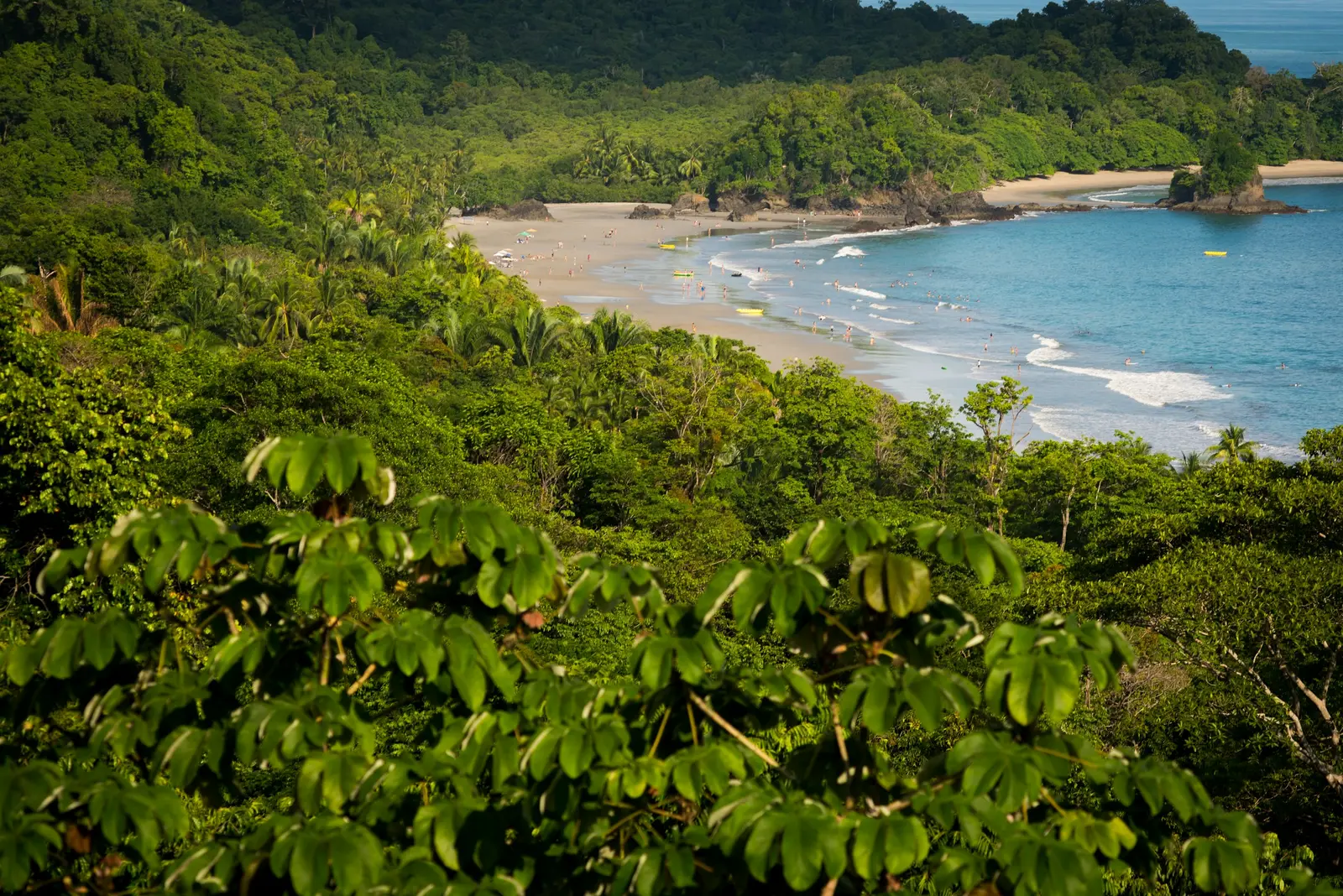
Costa Rica has excellent beaches on both the Pacific and Caribbean coasts, but the “best” beach depends on what you want to do and where it fits in your route. A calm resort beach, a surf town, a wildlife-rich national-park beach and a Caribbean swimming stop solve very different travel problems.
For a first 10-day trip, we normally favor the Central Pacific around Manuel Antonio because it combines naturally with La Fortuna and Monteverde. For a more beach-focused trip, Guanacaste gives you a much larger menu of Pacific beach bases.
Best beach region for a first 10-day trip: Manuel Antonio
Manuel Antonio is not Costa Rica's longest or quietest beach destination. Its advantage is efficiency.
Inside and around Manuel Antonio National Park, forest, wildlife and beaches are packed into a small area. That makes the destination easy to justify when you only have a few coastal nights.
Stay three nights and you can use one day for the park, another for a public beach, mangrove trip or coastal activity, then continue toward your departure point.
This is the beach choice for travelers who want nature plus coast, not a week-long resort stay.
Best region for beach choice: Guanacaste
Guanacaste covers a long stretch of northern Pacific coast, so it is better thought of as a beach region than a single destination.
Tamarindo and Playa Grande
Tamarindo is one of the most developed beach towns in the region, with restaurants, nightlife, surf schools and a broad range of accommodation.
Nearby Playa Grande is associated with Las Baulas National Marine Park and has a more nature-oriented identity while still sitting close to Tamarindo's services.
Choose this area if you want surfing, activity and plenty of places to eat.
Playa Conchal and Flamingo area
This part of Guanacaste suits travelers who want attractive Pacific beaches with resort and marina infrastructure nearby.
It is a better match for a relaxed beach stay than for travelers who want to walk everywhere in a busy town.
Playa Hermosa and Playas del Coco
These northern Guanacaste bases are useful when you want relatively easy access to services and the Liberia/Guanacaste side of the country.
Coco is the busier service town. Hermosa is generally a quieter beach base nearby.
Papagayo
The Papagayo area is associated with larger resorts and a more contained resort-style trip.
It works well when the hotel itself is a major part of the vacation. It is less useful if your priority is a walkable independent beach town.
Best for surf-town energy: Tamarindo
Tamarindo is an obvious first surf-town option because beginner lessons, board rentals, restaurants and nightlife are all easy to find.
That convenience also means it is not a hidden beach.
If you want a developed base where you can surf in the morning and choose among many restaurants at night, that is a strength rather than a weakness.
For a quieter trip, use Tamarindo as a reference point and look at smaller Guanacaste beach communities instead.
Best for wildlife and beach together: Manuel Antonio
The national park makes Manuel Antonio unusual.
You are not choosing between “wildlife day” and “beach day” in the same way you might elsewhere. Forest trails and park beaches can be part of one visit.
The limitation is popularity. Park entry is controlled and should be planned ahead, and the wider Manuel Antonio area is a major tourism destination.
If your priority is solitude, this is not the obvious choice. If your priority is seeing a lot in a short trip, it is one of the strongest.
Best Caribbean combination: Cahuita and the southern Caribbean
Cahuita National Park combines Caribbean beach scenery, forest and a protected marine environment.
Farther south, the Puerto Viejo area gives access to beaches such as Cocles and Punta Uva, with a different cultural and geographic feel from the Pacific.
The Caribbean should not be treated as a quick side trip from Manuel Antonio or Guanacaste. It deserves its own route because reaching it changes the direction of the trip.
Weather also differs from the Pacific. Read our Costa Rica weather guide before assuming the same dry-season pattern applies to both coasts.
Best for a wilder South Pacific trip: Dominical and Uvita
The coast south of Manuel Antonio becomes a useful option when you have more time.
Dominical is known for surf and a smaller-town feel. Uvita is associated with Marino Ballena National Park and is a practical base for the southern Central/South Pacific transition.
These stops fit a two-week trip better than our standard 10-day route because continuing south adds another hotel change and more road time.
They are especially useful if the goal is not simply “more beach,” but a different coastal environment.
Swimming safety matters more than beach rankings
Beautiful does not automatically mean easy swimming.
Costa Rica's official tourism guidance highlights rip currents as a major beach-safety issue, and many beaches do not have lifeguards. Conditions change with tide, swell and weather.
Before entering the water:
- look for warning signs and flags;
- ask locally about currents;
- do not assume other swimmers prove conditions are safe;
- supervise children closely;
- avoid swimming alone in rough or unfamiliar water;
- if caught in a rip current, stay calm and move parallel to shore rather than fighting directly against it.
A beach can be excellent for surfing and poor for casual swimming on the same day.
Pacific or Caribbean?
Choose the Pacific if you want the easiest fit with La Fortuna and Monteverde, a broad range of developed beach bases and the clearest dry-season pattern in the northern and central Pacific.
Choose the Caribbean if you want a distinctly different route, tropical Caribbean atmosphere and destinations such as Cahuita and Puerto Viejo.
For September and October travel, the Caribbean can also be attractive because its rainfall pattern differs from the very wet late green season on much of the Pacific.
There is no single coast that wins every month.
How many beach nights?
On a 7-day trip, two or three coastal nights are usually enough if you also want an inland nature destination.
On our 10-day itinerary, three nights in Manuel Antonio gives the trip a balanced finish.
On a 14-day itinerary, you have enough time to choose a more beach-heavy route or add Guanacaste without sacrificing every inland stop.
The right number is the one that still leaves you with actual beach time after transfer days are counted.
Pick the beach that fits the route
Do not build a trip by collecting the names of five famous beaches.
Choose a beach region that complements what you are already doing. La Fortuna plus Monteverde pairs naturally with Manuel Antonio. A Guanacaste-centered trip can combine beach time with Rincón de la Vieja. A Caribbean route can pair Puerto Viejo and Cahuita with different inland stops.
Start with the Costa Rica map, then decide whether the coast is the final chapter of the trip or the main reason you are going.
Keep planning
Build the rest of your Costa Rica trip
Use the core planning guides to connect where you stay, what you do and the day trips that are worth the travel time.