Costa Rica travel guide
Marino Ballena National Park: Uvita Beach, Whale Tail and Visit Planning
Plan Marino Ballena National Park in Uvita, including the Whale Tail tombolo, tides, park sectors, beaches, marine wildlife and practical access.
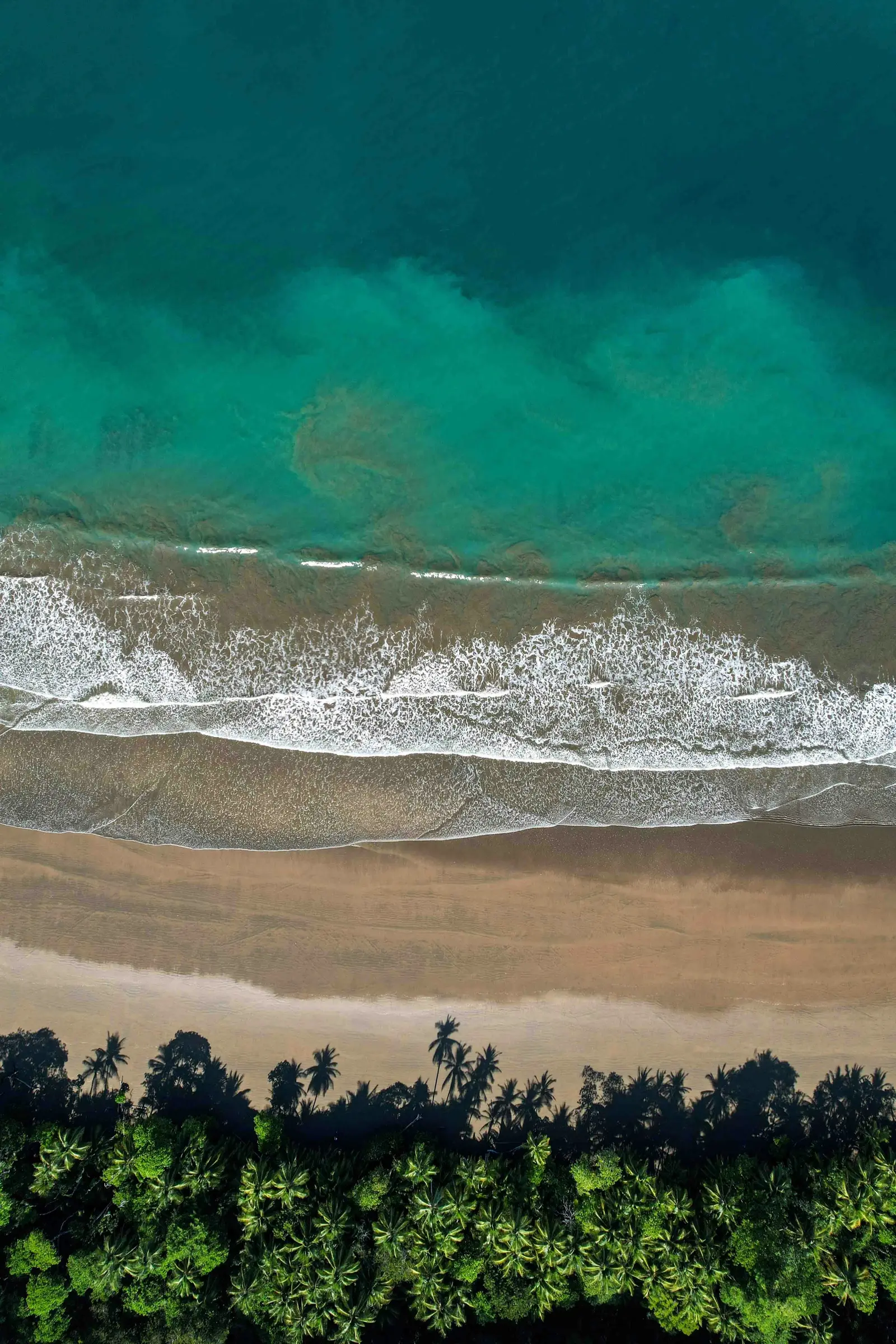
Marino Ballena National Park is the protected coastal park that gives Uvita its defining attraction: a tide-dependent sandbar shaped like a whale tail, surrounded by beaches and marine habitat. The park is also an important base for whale- and dolphin-watching trips.
The key planning detail is simple: check the tide.
The famous tombolo is not equally accessible at every hour.
What does the park protect?
SINAC describes Marino Ballena as Costa Rica's first protected area created specifically around marine resources.
The park includes thousands of hectares of marine habitat and a smaller terrestrial coastal strip.
Protected environments include:
- beaches;
- mangroves;
- rocky formations;
- reefs;
- marine waters;
- coastal forest.
That mix supports both recreation and wildlife conservation.
The Whale Tail
The Uvita tombolo is the park's best-known landscape feature.
Two currents and coastal sediment create the narrow formation that resembles a whale tail when seen from above.
At low tide, visitors can walk farther onto the exposed formation.
At higher tide, water covers parts of the route.
SINAC specifically advises visitors to consult tide tables before attempting the walk.
Park sectors
Marino Ballena has multiple official access sectors, including Uvita, Colonia, Ballena and Piñuela.
That matters because the park is not one small fenced beach.
Your choice of entrance depends on which beach or activity you want.
Most first-time visitors focused on the whale tail use the Uvita sector.
Tickets and reservations
Current official guidance says tickets are purchased at authorized park counters and that advance reservations are not required.
Payment procedures, fees and sector hours can change.
Check the current Visit Costa Rica/SINAC information shortly before travel.
Do not assume advice from Manuel Antonio or another national park applies here.
Whale and dolphin watching
The marine protected area is closely associated with humpback whales and dolphins.
Boat tours depart from the Uvita/Bahía Ballena area.
The park's waters are used seasonally by humpbacks, while dolphins may be encountered year-round.
A tour provides access to marine areas you cannot experience from the beach.
See whale watching in Uvita for the activity-specific decision.
Can you swim?
Swimming and beach use are part of the park experience when conditions are appropriate.
Pacific conditions can change quickly.
Pay attention to currents and local warnings.
Do not interpret the protected status as proof that every section is safe for casual swimming at all times.
Snorkeling and marine activities
SINAC lists activities such as snorkeling, diving and kayaking among possible park experiences.
Conditions determine whether those activities are worthwhile on a particular day.
If a boat tour advertises snorkeling, check whether it is conditional on visibility and sea state.
Do not book a whale tour purely for a guaranteed snorkeling stop.
How long do you need?
A simple beach-and-whale-tail visit can fill a few hours.
A full day works if you combine the park with a marine tour.
For a three-night Uvita stay, you do not need to spend every day inside the park.
Leave time for the wider South Pacific environment.
What should you bring?
Bring:
- water;
- sun protection;
- swimwear;
- sandals or water-friendly footwear;
- dry bag;
- insect repellent;
- tide information.
Shade can be limited on exposed beach sections.
Start earlier if you want cooler walking conditions and the tide cooperates.
Marino Ballena or Manuel Antonio National Park?
Choose Marino Ballena for marine habitat, whale watching and the South Pacific route.
Choose Manuel Antonio National Park for forest wildlife and a compact park-and-beach day.
They are complementary rather than substitutes.
Travelers with enough time can visit both while moving south.
Plan the Whale Tail around the tide
The most common planning mistake is arriving at the Uvita sector without checking when the tombolo is exposed.
Low tide creates the best access window, but the exact clock time changes every day.
Check a reliable local tide table shortly before the visit and allow time to walk out and back before water cuts across the formation.
Do not leave bags or shoes where a rising tide can reach them.
If your whale tour and ideal low tide overlap, prioritize the activity that is harder to reschedule. The sandbar exists every day; a booked wildlife departure has a fixed start.
Which entrance should you use?
The Uvita sector is the obvious choice for the Whale Tail.
Other sectors can make more sense for a quieter beach day or if your accommodation is farther south.
Do not drive automatically to Uvita just because it is the park's best-known entrance.
Responsible marine wildlife viewing
Choose operators that follow current wildlife-viewing rules and avoid chasing animals aggressively.
A whale is not supposed to perform for a boat.
Good wildlife tourism accepts distance, patience and the possibility that sightings are brief.
Best planning sequence
First, choose your Uvita dates.
Second, check whale season if that matters.
Third, check the tide for the day you want to walk the tombolo.
Then decide whether the park visit and whale tour happen on the same day.
For the broader destination plan, use the Uvita guide.
Keep planning
Build the rest of your Costa Rica trip
Use the core planning guides to connect where you stay, what you do and the day trips that are worth the travel time.