Costa Rica travel guide
Where to Stay in Guanacaste: Tamarindo, Papagayo, Coco or Flamingo?
Choose where to stay in Guanacaste by comparing Tamarindo, Papagayo, Coco, Playa Hermosa, Flamingo, Potrero and inland Rincón de la Vieja.
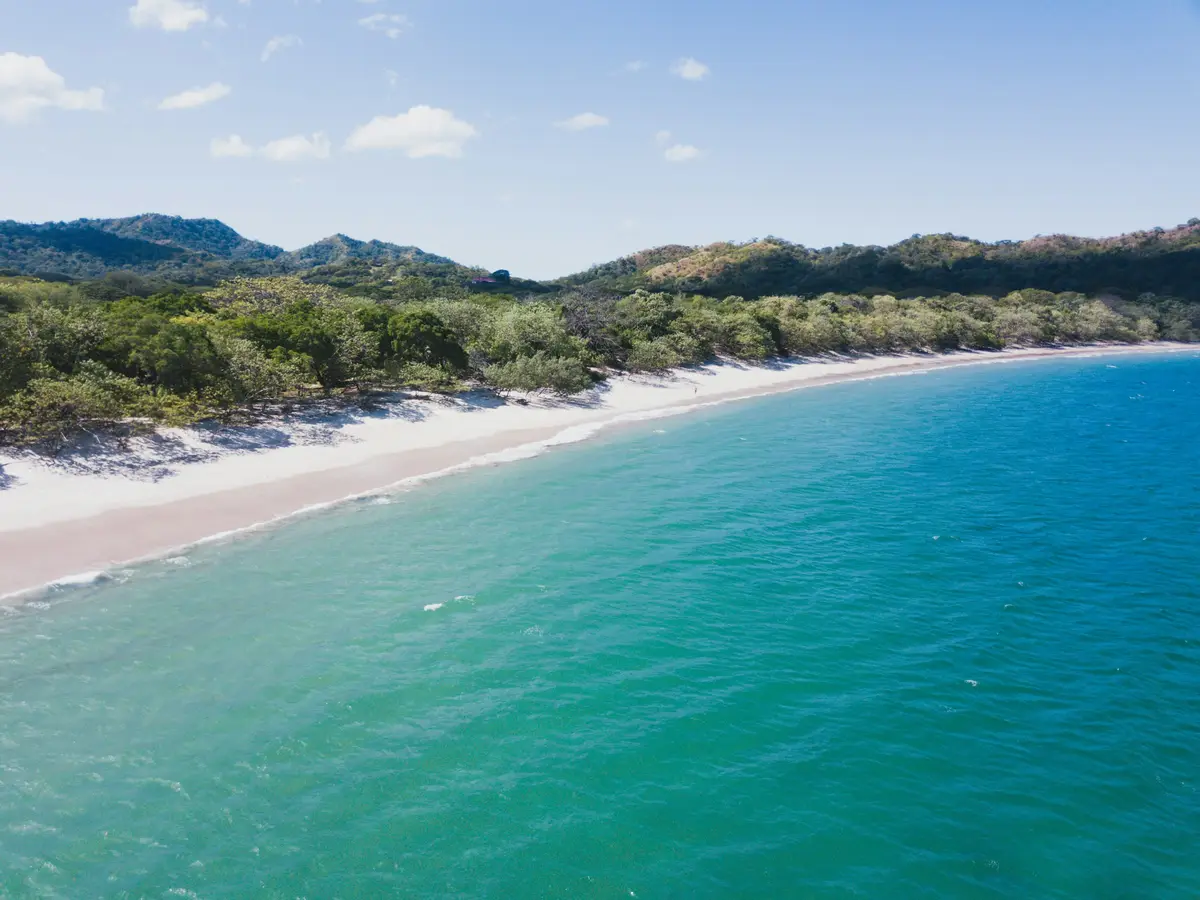
The best place to stay in Guanacaste depends on whether you want a beach town, a self-contained resort, a marina-oriented coast or an inland adventure base. The province covers a large area, so choosing “a hotel in Guanacaste” without choosing the right zone first can create unnecessary driving.
For most first-time visitors, the shortlist is Tamarindo, Flamingo/Potrero, Coco/Hermosa, Papagayo or an inland stay near Rincón de la Vieja.
This guide compares bases and local transport decisions first, so you can judge whether a hotel location fits your trip before comparing individual properties.
Tamarindo: best for a walkable beach town
Tamarindo is the easiest default for travelers who want activity outside the hotel.
The town has restaurants, nightlife, surf schools, tours and beach access in one developed base.
Choose Tamarindo if you want:
- beginner-friendly surf infrastructure;
- restaurants within town;
- sunset sailing;
- an active evening scene;
- easier no-car travel;
- a broad range of accommodation styles.
The tradeoff is popularity.
If you want an isolated beach or a resort that feels removed from town life, another Guanacaste base may suit you better.
Flamingo and Potrero: best for marina and quieter coast
The Flamingo/Potrero area is useful for travelers who want Pacific beach time with marine activities nearby.
Marina access makes boating, fishing and sailing a natural part of the stay.
Compared with Tamarindo, evenings can feel less centered on one busy tourism strip.
Choose this area if the coast and boat access matter more than nightlife.
A rental car can be useful for exploring neighboring beaches and restaurants.
Playas del Coco: best for services in northern Guanacaste
Coco is one of the more established service towns on the northern coast.
It has restaurants, shops, nightlife and access to marine activities.
Choose Coco when practical services and a lively town matter more than having the most polished resort environment.
It can also work well as a base for day trips because of its northern location.
For travelers who want something quieter nearby, Playa Hermosa is the obvious comparison.
Playa Hermosa: best for a quieter northern base
Playa Hermosa offers a calmer beach-town feel while remaining near Coco and the broader northern Guanacaste tourism zone.
It can suit couples and families who want beach access without placing nightlife at the center of the stay.
The exact property location matters because “Hermosa” can refer to different beaches in Costa Rica.
When booking, confirm you are looking at the Guanacaste Playa Hermosa near Coco/Papagayo rather than another same-name destination.
Papagayo: best for a resort-centered trip
The Papagayo area is the strongest choice for travelers who want the property itself to be a major part of the vacation.
Larger resorts, private-feeling beaches and organized excursions define much of the experience.
Choose Papagayo if you value:
- resort facilities;
- on-property dining;
- beach/pool downtime;
- arranged excursions;
- a contained trip.
Do not choose it because you expect a walkable town outside the resort.
If independent restaurants and evening strolling matter, Tamarindo or Coco may be easier.
Rincón de la Vieja: best inland base
An inland stay near Rincón de la Vieja creates a completely different Guanacaste trip.
This is the right choice for volcano landscapes, hiking, hot springs and adventure activities.
It works especially well as a one- or two-night contrast to a longer beach stay.
For a three-night Guanacaste stop, splitting accommodation may be unnecessary.
For five or more nights, an inland night can reduce the need for a long same-day beach commute.
Which area is best without a car?
Tamarindo is the easiest general answer because you can walk to restaurants and many services.
A resort in Papagayo can also work without a car if you plan to stay on property and use organized excursions.
Coco is practical if your accommodation is central.
Flamingo/Potrero and more dispersed beach areas can be easier with a car or planned taxi/transfer use.
Before booking, ask how you will reach dinner and tours rather than assuming every coastal property is walkable.
Which area is best with a car?
A rental car makes Guanacaste much easier to explore.
It is particularly useful for:
- moving between smaller beaches;
- staying outside town centers;
- reaching inland attractions;
- restaurant choice in spread-out areas;
- combining coast and Rincón de la Vieja.
That said, do not choose a remote property simply because you have a vehicle.
Repeated 30-minute drives to meals can still become inconvenient.
Use our renting a car in Costa Rica guide for the broader decision.
Which area is easiest from Guanacaste Airport?
The airport is near Liberia and gives northern Guanacaste a major logistics advantage.
Coco, Hermosa and Papagayo are positioned relatively close to the airport compared with southern beach areas.
Tamarindo requires a longer road transfer but remains a standard tourism route.
If Tamarindo is your destination, use our Guanacaste Airport to Tamarindo guide before deciding whether to rent a car.
Best for families
Families often benefit from either:
- a full-service resort with pool, food and easy excursions;
- or a developed town where meals and supplies are simple.
Papagayo can work well for a contained resort vacation.
Tamarindo works well for families who want more independent choices.
The best answer depends on whether parents want the hotel to solve most logistics.
Best for couples
Couples have more flexibility.
Tamarindo suits a social trip with restaurants and activity.
Flamingo/Potrero can feel more relaxed.
Papagayo fits a higher-end resort stay.
A split coast + Rincón itinerary can work well for couples who want beach and adventure in the same region.
Guanacaste areas at a glance
| Your main priority | Start by comparing | Check before booking |
|---|---|---|
| Walkable restaurants and beginner surf | Tamarindo | Whether the accommodation is actually within walking distance of the town center |
| A quieter beach base with nearby services | Playa Hermosa or Coco | Exact beach, property location and evening transportation |
| Resort facilities and organized excursions | Papagayo | What is included, dining options and transfer arrangements |
| Sailing or marina access | Flamingo and Potrero | Distance from the marina and whether a car is useful |
| Volcano trails and adventure rather than beach time | Rincón de la Vieja area | Tour departure points and how far the lodging is from your planned trails |
A good base is not necessarily the closest name on a map. Two accommodations marketed as being in the same area can involve very different drives. Look up the exact property location and your two most important activities before comparing nightly rates.
A practical three-night versus five-night decision
For three nights: choose one coast or inland base and avoid changing hotels just to see an extra beach. If you fly into Liberia and mostly want relaxation, Coco/Hermosa or Papagayo can simplify the trip. If you want walkable surf-town evenings, Tamarindo may be worth a longer transfer.
For five nights or more: a split stay becomes more reasonable when it serves two distinct goals. For example, combine coastal downtime with an inland stay near Rincón de la Vieja. Split only when you can name the activities that the second base makes easier.
If this is one section of a ten-day trip that also includes Arenal, Monteverde or Manuel Antonio, account for the whole route rather than picking a Guanacaste hotel in isolation. Compare the ten-day itinerary and the Costa Rica route map before committing to a long detour.
Does the time of year affect your Guanacaste base?
In the Pacific dry-season months, beach plans are easier to build around several outdoor activities in a row. In the wetter months, a resort with flexible on-site options or a town with straightforward transport may be a better fit than a remote property that requires long drives for every meal. This does not mean all beaches experience identical daily weather.
See the best time to visit Costa Rica for the month-and-region decision, or Costa Rica weather for the underlying rainfall patterns. Choose the base for the experience first, then plan activities around the season.
Choose the experience first
Do not start with a hotel-ranking list.
Decide whether your Guanacaste stay is mainly about:
- surfing and town life;
- resort downtime;
- sailing and marina activities;
- beach-hopping;
- or inland volcano adventure.
Then choose the area.
Use the broader Guanacaste guide and things to do in Guanacaste to make that decision before paying for accommodation.
Keep planning
Build the rest of your Costa Rica trip
Use the core planning guides to connect where you stay, what you do and the day trips that are worth the travel time.