Costa Rica travel guide
Hanging Bridges in Monteverde: What to Know Before You Book
Plan a Monteverde hanging-bridges walk with advice on guided vs self-guided visits, cloud-forest scenery, combining bridges with ziplining and what to wear.
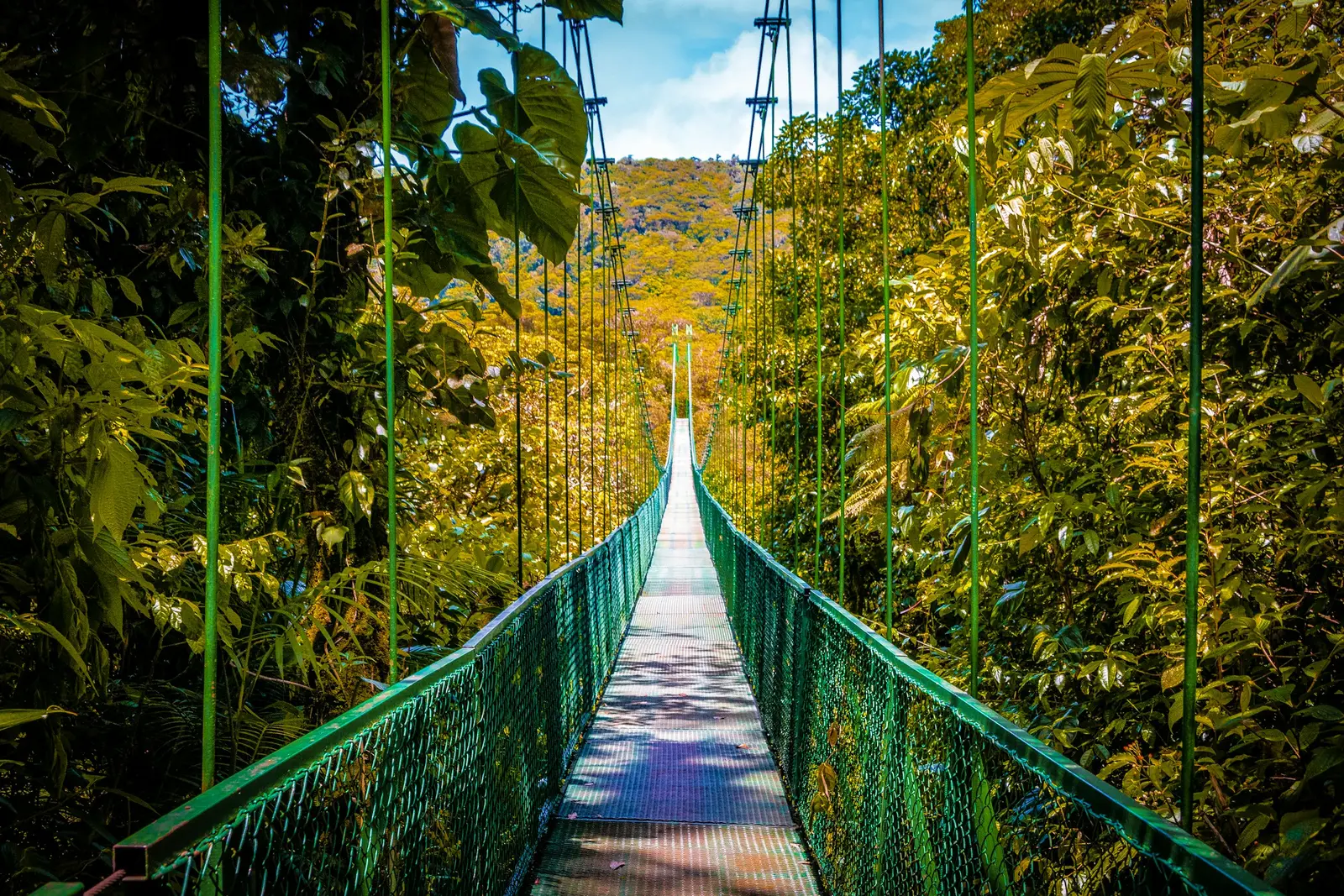
Hanging bridges are one of the easiest ways to experience Monteverde's cloud-forest canopy without turning the day into a high-adrenaline activity. You walk forest trails connected by elevated suspension bridges, gaining views into vegetation that is difficult to appreciate from ground level.
Monteverde has more than one hanging-bridge park, so the useful decision is whether you want a self-guided scenic walk, a naturalist-focused tour or a combined bridge-and-zipline day.
Why do hanging bridges in Monteverde?
Official Costa Rica tourism material highlights Monteverde's suspension bridges as a signature way to explore the canopy.
They are especially useful if you want:
- cloud-forest scenery without zipline adrenaline;
- a walk suitable for mixed-interest groups;
- photography and time to stop;
- a canopy perspective different from a standard trail;
- an activity that can pair with a reserve visit or night walk.
The bridges are not a substitute for the Monteverde Cloud Forest reserve. They are a different way of seeing the forest.
Monteverde has multiple bridge parks
Do not assume every “Monteverde hanging bridges” listing refers to the same property.
The region has several private adventure parks with suspended walkways, different trail layouts and different combinations of zipline, tram or wildlife attractions.
Before booking, check:
- exact park name and location;
- trail length;
- number and style of bridges;
- whether a guide is included;
- transport from your accommodation;
- whether another activity is bundled;
- cancellation and weather policy.
This prevents the common mistake of comparing prices for packages that are not actually equivalent.
Guided or self-guided?
Choose self-guided if you mainly want scenery, photography and the freedom to walk at your own pace.
Choose guided if wildlife and natural history are important.
A guide can help identify birds, plants and small animals that are easy to miss. But the hanging bridges themselves are often designed to be understandable as a standalone walking experience.
If you already have a naturalist guide booked for the biological reserve or a night walk, you may not need another guided nature activity the same day.
Hanging bridges vs the biological reserve
The Monteverde Cloud Forest Biological Reserve is the stronger choice for travelers who want a classic forest-hiking and conservation experience.
Hanging bridges are better when the elevated perspective itself is the attraction.
The reserve is about moving through protected cloud forest on a trail network. Bridge parks are designed visitor experiences that make the canopy accessible.
Both can fit in one itinerary, but they should not be treated as duplicates.
Hanging bridges vs ziplining
The zipline moves through the canopy quickly.
Hanging bridges let you stop.
That difference matters for families, photographers and travelers who are nervous about heights or harness-based activities.
If you want the adventure sensation, zipline. If you want to notice epiphytes, mist, bird movement and changes in the forest structure, bridges are often the better choice.
Should you combine bridges and zipline?
Yes, if both are priorities and you have limited time.
No, if the combination leaves no energy for the reserve or makes the whole day feel like one long commercial attraction.
A combo works especially well on a two-night stay when you want one efficient adventure block and a separate cloud-forest walk.
If you have three nights, separating the activities gives you more flexibility.
What to wear
Monteverde can be cool, damp and windy compared with the lowlands.
Bring:
- closed shoes with good grip;
- quick-drying clothing;
- a light waterproof shell;
- a small water bottle;
- camera protection;
- a light layer if the day is cool.
Avoid umbrellas on exposed bridges. A shell keeps your hands free and is easier in wind.
Mist is part of the experience, not necessarily a sign that the day is ruined.
Are the bridges scary?
That depends on your comfort with height and movement.
Suspension bridges can sway, and some span high above the forest floor.
They are designed for visitors, but someone with a strong fear of heights may still find them uncomfortable.
If that applies to you, ask the operator about route options before booking. Do not assume you can skip every bridge and still complete the full trail.
Wildlife expectations
Monteverde is biologically rich, but hanging bridges are not a zoo.
You may see birds, monkeys or smaller wildlife, but sightings depend on time, weather, noise and chance.
Go for the forest perspective first.
If wildlife spotting is the main goal, a guided early reserve walk or night walk may provide a more focused experience.
Best time of day
Morning can offer cooler conditions and pairs naturally with afternoon downtime or another activity.
Afternoon can work well after an early reserve visit.
There is no guarantee that one time produces better views or wildlife because cloud and mist can move rapidly through the highlands.
Choose the time that gives the rest of your itinerary enough breathing room.
How this fits a two-night stay
A practical plan is:
Arrival day: settle in and consider a night walk.
Full day: cloud forest in the morning, then hanging bridges in the afternoon—or reverse the order if your bookings work better.
Departure day: leave for Manuel Antonio or the next stop.
If you also want ziplining, use a combined bridges/zipline block or add a third night.
See where to stay in Monteverde before booking, because attraction location affects transport more than many first-time visitors expect.
Keep planning
Build the rest of your Costa Rica trip
Use the core planning guides to connect where you stay, what you do and the day trips that are worth the travel time.